
Why Traditional Mobile Forensic Tools Fall Short for Legal Teams
Modern mobile forensics can uncover critical evidence, but most legacy tools were never built for the way legal teams work today. In litigation, investigations, and regulatory response, counsel needs speed, proportionality, defensibility, and privacy controls, not a lab-style process built for criminal seizure and exhaustive extraction.
Why Legal Teams Need a Different Mobile Forensics Approach
Traditional mobile forensics platforms came from law enforcement and specialized labs. Their workflows assume physical possession of a device, deep technical handling, and broad capture designed to preserve everything possible. That model fits a criminal inquiry better than a civil matter with deadlines, privilege concerns, and proportionality demands.
Legal discovery operates under a different set of pressures. Outside counsel, in-house teams, and litigation support providers often deal with client-owned phones, personal devices in BYOD settings, cross-border matters, and custodians spread across many locations. They need a process that can collect relevant mobile content without turning every matter into a full forensic event.
This gap matters because mobile forensics and evidence now sits at the center of many disputes. Text messages, WhatsApp chats, attachments, and call data often contain the context that email misses. When the collection method is too rigid or too broad, the result is friction at the exact point where legal teams need precision.
The Cost and Complexity Problem
Legacy mobile forensics tools are often expensive. This was because they rely on technician-heavy workflows. Physical access, onsite support, shipping, manual handling, and per-device cost structures can make collection disproportionate to the value of the matter. For law firms and corporate departments, that spend can escalate long before attorney review even begins.
Complexity adds another layer of strain. When a process requires specialty hardware, forensic personnel, and multiple handoffs before data becomes usable, the timeline stretches and the chain of activity grows harder to manage. That is especially troublesome when courts, regulators, or internal stakeholders expect rapid preservation and production.
The downstream effect reaches far beyond collection. Slow intake delays review, increases project management overhead, and burdens legal operations with logistics that do not advance case strategy. Even strong eDiscovery software cannot fully offset a collection process that creates avoidable bottlenecks at the start.
A mobile forensics tool can be technically powerful and still be operationally wrong for legal work. If the system is difficult to scale across many custodians, jurisdictions, or matters, it introduces risk rather than reducing it. Legal teams need predictable workflows, not one-off forensic exercises that consume time and budget.
Over-Collection in Mobile Forensics Creates Legal Risk
One of the biggest weaknesses of traditional mobile collection is over-collection. Full device imaging or broad extraction may gather far more data than the matter actually requires. That can pull in irrelevant personal content, privileged communications, confidential business records, and regulated information that should never have entered review in the first place.
For legal teams, that is not just an efficiency issue. It is a governance issue tied to privacy duties, proportionality standards, and data compliance regulations across multiple jurisdictions. A broad pull can increase exposure, inflate hosting and review volume, and complicate decisions about access, retention, and production.
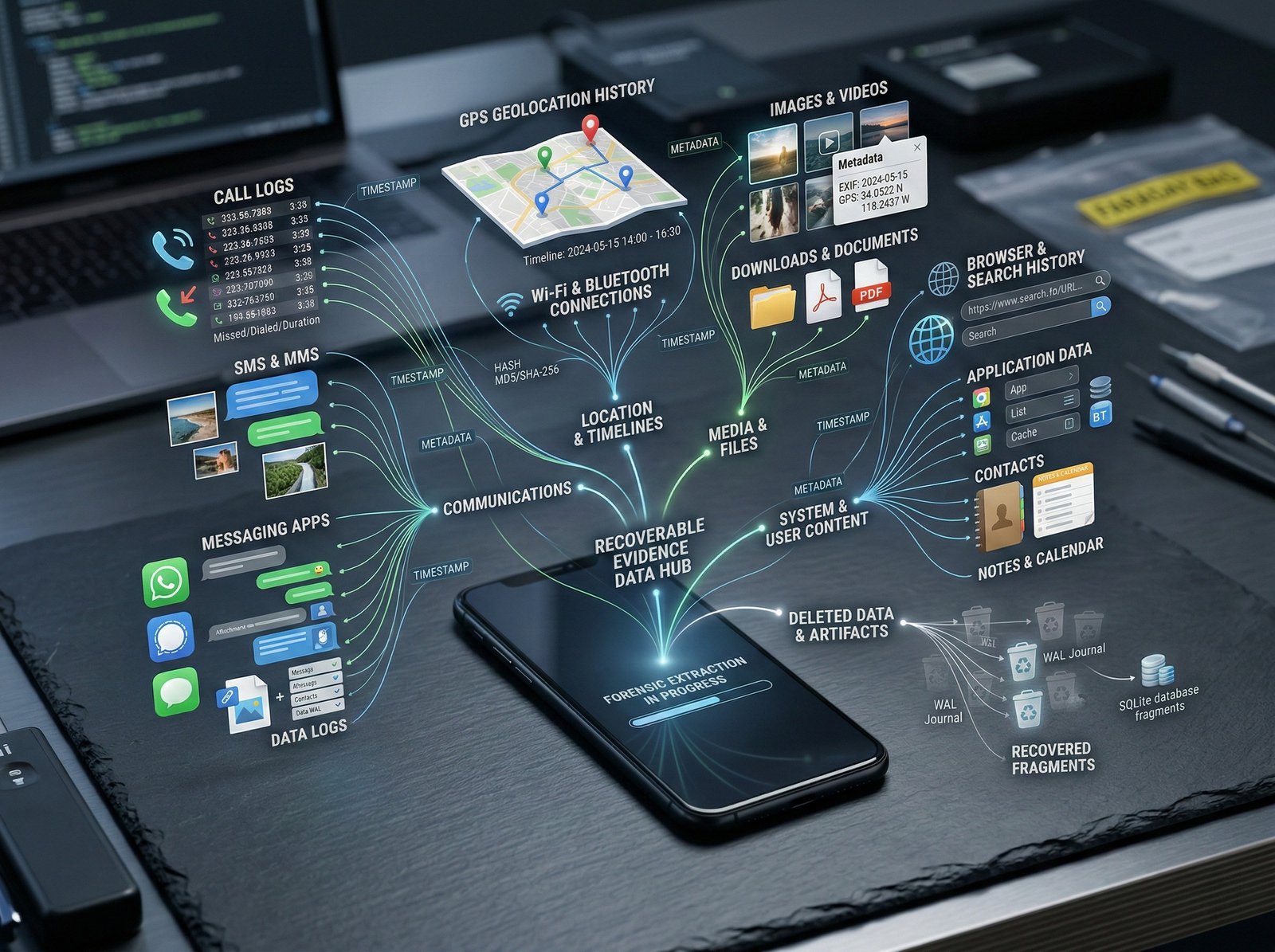
The privilege problem is especially serious. When unscoped collection sweeps in unrelated conversations and sensitive attachments, reviewers must spend more time separating responsive material from protected or personal content. That added volume raises cost and increases the chance of mistakes.
What Purpose-Built Mobile Forensics Looks Like
A legal-ready alternative starts with scoping. PME was designed for legal, compliance, and enterprise discovery teams rather than law enforcement workflows. The PME platform supports targeted, remote collection by custodian, date range, app, and data type, which helps teams focus on relevant mobile evidence while limiting unnecessary capture.
That design changes the operating model. PME Collect allows custodians to participate remotely without device shipping or onsite technicians, and PME Review provides browser-based search, tagging, redaction, comment, and export functions for collected material. Together, those components move mobile data from acquisition to review-ready output with fewer handoffs and less operational drag.
The platform also addresses defensibility requirements that legal teams cannot ignore. PME uses repeatable workflows, clear chain-of-custody, comprehensive audit logging, encryption, role-based access controls, and options for regional data residency. Those controls support legal admissibility, privacy obligations, and regulated use cases where documentation matters as much as the evidence itself.
A modern process should also match legal economics. PME offers flexible pricing models, including prepaid collection credits and monthly plans, which better align spending with matter needs than high-friction per-device forensic engagements. That makes mobile evidence more accessible for routine disputes, internal reviews, and larger investigations alike.
Build a More Defensible Workflow
Legal teams do not need less rigor. They need rigor delivered in a form that matches litigation, investigations, and regulatory response. PME was built to support that need with remote collection, targeted acquisition, review-ready preparation, and controls designed for courts, regulators, and enterprise legal departments.
For firms and in-house groups reevaluating their mobile evidence process, a better next step is to assess whether current workflows are proportional, privacy-aware, and fast enough for modern matters. Reviewing PME’s approach can help teams see how targeted collection and integrated review can reduce cost, lower exposure, and improve defensibility without the burden of legacy mobile forensics. Request a demo today.
FAQ
1. How does PME reduce over-collection during mobile discovery?
PME supports targeted, scoped collection by custodian, date range, and data type, which minimizes capture of irrelevant, personal, or sensitive information while preserving defensibility.
2. Can PME fit into existing legal workflows?
Yes. PME combines remote mobile collection with browser-based review, offers API and webhook integration options, and supports review-ready exports such as PDF, CSV, XML, and RSMF.
3. Who is PME built for?
PME serves law firms, litigation teams, corporate legal and compliance departments, regulated industries, and eDiscovery service providers that need defensible mobile data collection and efficient review workflows.